
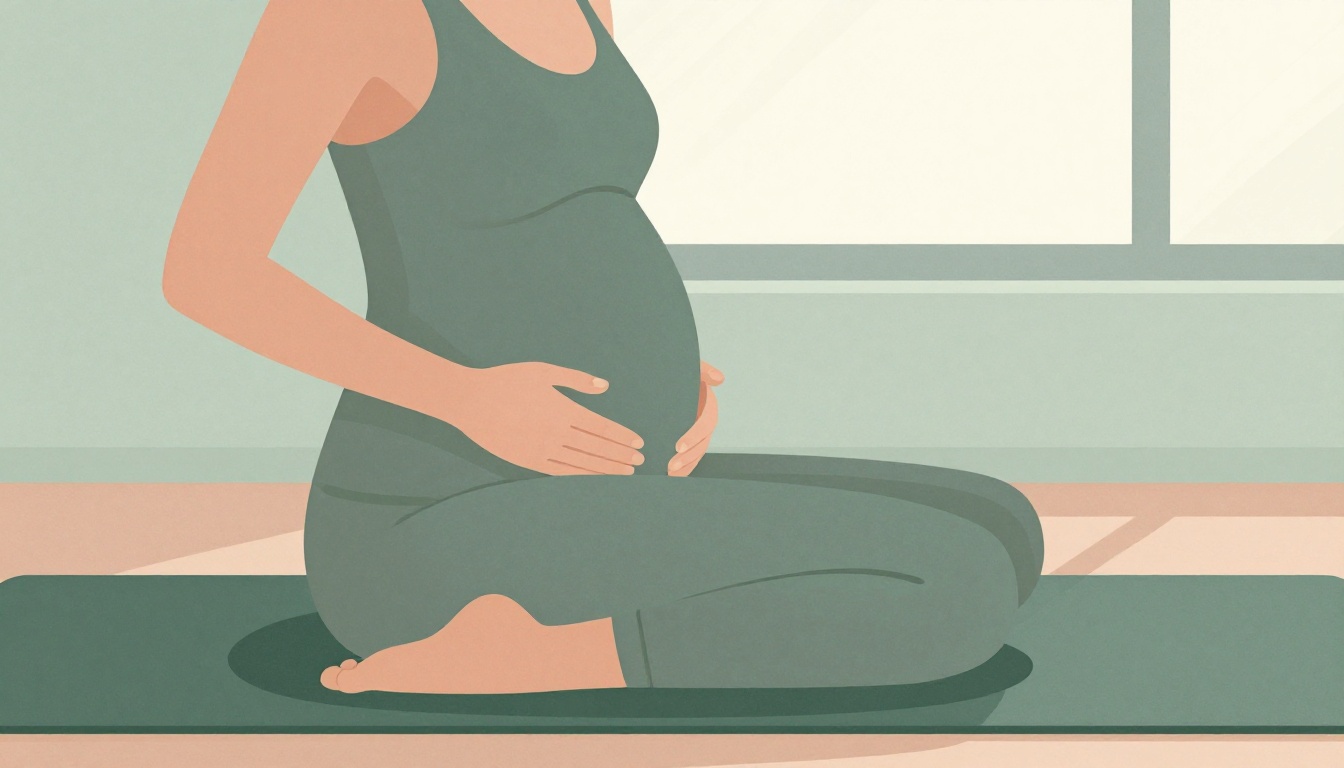
You just had a baby. Your body is healing, you're sleep-deprived, and you might feel pressure to "bounce back" fast. But rushing into exercise after birth can set back your recovery and lead to injury. The real question isn't "when can I work out?" — it's "how do I move safely, week by week, to rebuild strength without hurting myself?"
This guide gives you a clear, research-backed timeline for returning to exercise after vaginal delivery or C-section. Follow it, listen to your body, and always get clearance from your provider before starting any new activity.
According to ACOG, how many minutes of moderate-intensity aerobic activity should postpartum women aim for each week?
Select one answer.
The first two weeks: rest, reconnect, and breathe
Your body just went through a major physical event. Whether you delivered vaginally or by C-section, the first two weeks are about healing, not exercising.
Focus on gentle diaphragmatic breathing. This helps reconnect your deep core and pelvic floor without strain. Short, slow walks around the house are encouraged from day one to prevent blood clots and improve circulation.
If you had a C-section, avoid lifting anything heavier than your baby for the first 3-4 weeks. Use the log-roll technique to get out of bed to protect your incision.
Weeks 3-4: gentle movement and core reconnection
Once your bleeding has lightened and you feel ready, you can begin gentle, gravity-neutral exercises. Think pelvic tilts, heel slides, and seated glute squeezes.
According to the American College of Obstetricians and Gynecologists (ACOG), if you had an uncomplicated vaginal delivery, it's generally safe to begin exercising a few days after birth — but that means walking and gentle stretching, not high-impact workouts. For C-section moms, wait until your provider clears you, typically around 6-8 weeks.
Weeks 5-6: build capacity, protect healing tissues
This is the phase where you can gradually increase your walking duration and add more core and glute work. 90/90 hip lifts with a reach, bird dogs, and bridges are excellent choices.
Your uterus takes about 6-8 weeks to return to its pre-pregnancy size, and your incision (if you had a C-section) needs that same time to heal. Don't rush. If something hurts, stop.
Weeks 6-8: clearance and progression
At your postpartum checkup, your provider will assess your healing and give you the green light for more activity. For vaginal delivery, ACOG recommends resuming normal physical activity around 6 weeks. For C-section, it's typically 8 weeks.
Once cleared, you can start low-impact cardio like brisk walking, stationary cycling, or swimming. Begin with 20-30 minute sessions, 3-4 days per week. Add light resistance training using bodyweight or very light bands.
Weeks 8-12: return to impact and strength
If you're feeling strong and have no pain or pelvic floor issues, you can gradually reintroduce impact. Running, jumping, and heavier lifting should wait until at least 10-12 weeks postpartum.
A study published in the Journal of Women's Health Physical Therapy found that 75% of postpartum runners return to running within eight weeks after delivery. But that doesn't mean it's right for everyone. Listen to your body. If you experience leaking, pelvic pressure, or pain, scale back and consult a pelvic floor physical therapist.
Key safety checklist
- Always get medical clearance before starting or progressing exercise.
- Avoid high-impact activity until at least 12 weeks if you had a C-section.
- Stop any exercise that causes pain, leaking, or pelvic pressure.
- Prioritize core and pelvic floor reconnection before adding load.
- Aim for 150 minutes of moderate-intensity aerobic activity per week once cleared.
How the Resident Expert Can Help
Navigating postpartum recovery can feel overwhelming, but you don't have to do it alone. Natalie Marchione, a psychiatric nurse practitioner and founder of Rooted Postpartum Care, offers holistic, virtual mental health and nutrition support for new mothers in Maryland, Washington DC, and Wyoming. Her approach treats the whole person — emotional well-being, nutrition, sleep, and stress — so you can heal fully and feel confident in your new role. Whether you're dealing with anxiety, burnout, or just need guidance on your recovery journey, Natalie provides the personalized care you deserve.