
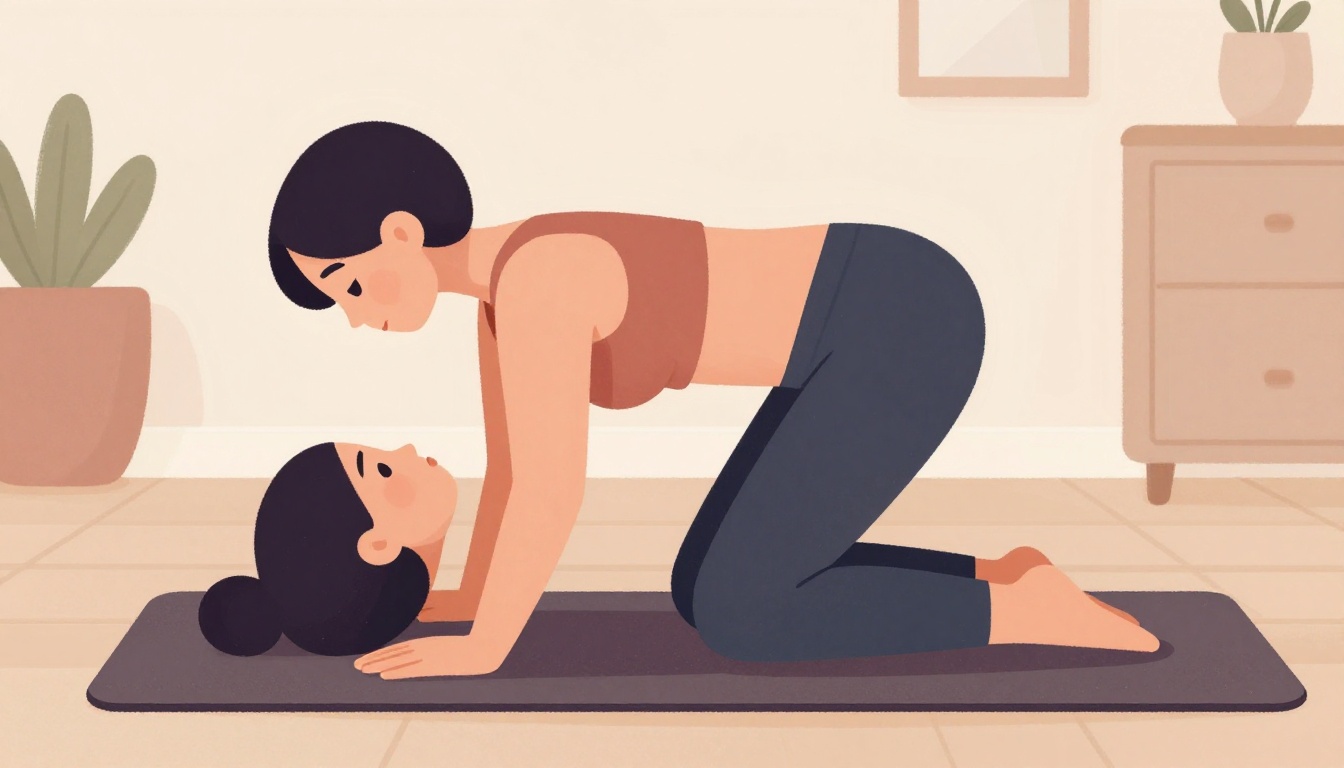
If you are a new mother dealing with a sore lower back, you are not alone. Up to 88% of mothers report experiencing back pain after having a baby, and for many, it significantly impacts daily life. The good news is that simple, targeted stretches can bring real relief. This guide walks you through safe, effective moves you can do at home, plus everyday habits that protect your back while you care for your newborn.
Which of the following is a safe and effective stretch for postpartum back pain?
Select one answer.
Why your back hurts after birth
Postpartum back pain often stems from a combination of factors. During pregnancy, hormones loosen the ligaments in your pelvis and lower back to prepare for birth, and those effects don't disappear overnight. Your abdominal muscles also stretch and may separate (diastasis recti), reducing support for your spine. Add in the forward shift in posture from carrying your baby, and then the daily demands of lifting, feeding, and hunching over a bassinet—it's a recipe for discomfort.
Safe stretching basics
Before you start, check with your doctor, midwife, or physiotherapist about when it's safe to exercise after delivery. Begin each stretch slowly and gently. You should feel a mild pull, never sharp pain. If something hurts, stop immediately. Low-impact activities like walking, yoga, and stretching are generally safe as long as you don't overdo it.
5 gentle stretches to try
1. Pelvic tilt
Lie on your back with knees bent and feet flat on the floor. Tighten your belly muscles by pulling your navel toward your spine, then press your lower back into the floor. Hold for about 6 seconds while breathing smoothly, then relax. Repeat 8 to 12 times. This move gently strengthens your core and eases lower back tension.
2. Single knee-to-chest stretch
Lie on your back with one knee bent and the other leg straight. Clasp your hands under the bent knee and bring it toward your chest, keeping your lower back pressed to the floor. Hold for 15 to 30 seconds, then switch legs. Repeat 2 to 4 times per side. If keeping the opposite leg straight bothers your back, bend that knee too.
3. Cat-cow stretch
Start on your hands and knees with hands directly under shoulders. Inhale, let your belly drop and lift your head and tailbone (cow pose). Exhale, round your spine upward like a cat, tucking your chin. Move slowly with your breath for 5 to 10 rounds. This improves spinal mobility and releases tension in the mid and lower back.
4. Child's pose
Kneel with big toes together and knees apart. Sit back on your heels, then fold forward, extending your arms in front of you. Rest your forehead on the floor and breathe deeply for 30 seconds to a minute. This soothing stretch releases tension in the lower back, hips, and shoulders.
5. T-spine rotation
Start on all fours. Place one hand behind your head, elbow pointing down. Rotate your upper body, driving the elbow up toward the ceiling, then lower it toward the opposite wrist. Repeat 5 to 10 times per side. This keeps your upper back mobile and prevents strain from hunching over while feeding.
Daily habits that protect your back
Stretching works best when paired with better body mechanics. Keep your baby close to your chest instead of reaching out. When you need to pick something up, bend at your knees, not your waist. While feeding, keep your back upright and experiment with positions that don't strain your shoulders. Keep frequently used items at arm's height to avoid twisting or bending.
When to seek help
If pain persists or worsens, or if you notice any unusual symptoms, talk to your healthcare provider. A physical therapist or pelvic health specialist can create a personalized plan. Remember, postpartum back pain is common, but it's not something you have to simply endure.
How the Featured Expert Can Help
If you're also feeling overwhelmed, anxious, or burned out alongside physical discomfort, holistic support can make a difference. Rooted Postpartum Care offers virtual, individualized mental health and nutrition-focused care for new mothers in Maryland, Washington DC, and Wyoming. Led by psychiatric nurse practitioner Natalie Marchione, the practice treats the whole person—addressing emotional well-being, nutrition, sleep, and stress—so you can recover fully.
Quiz: Test your knowledge
Which of the following is a safe and effective stretch for postpartum back pain?
- A. Deep forward fold with straight legs
- B. Pelvic tilt
- C. Full backbend
Correct answer: B. Pelvic tilt