
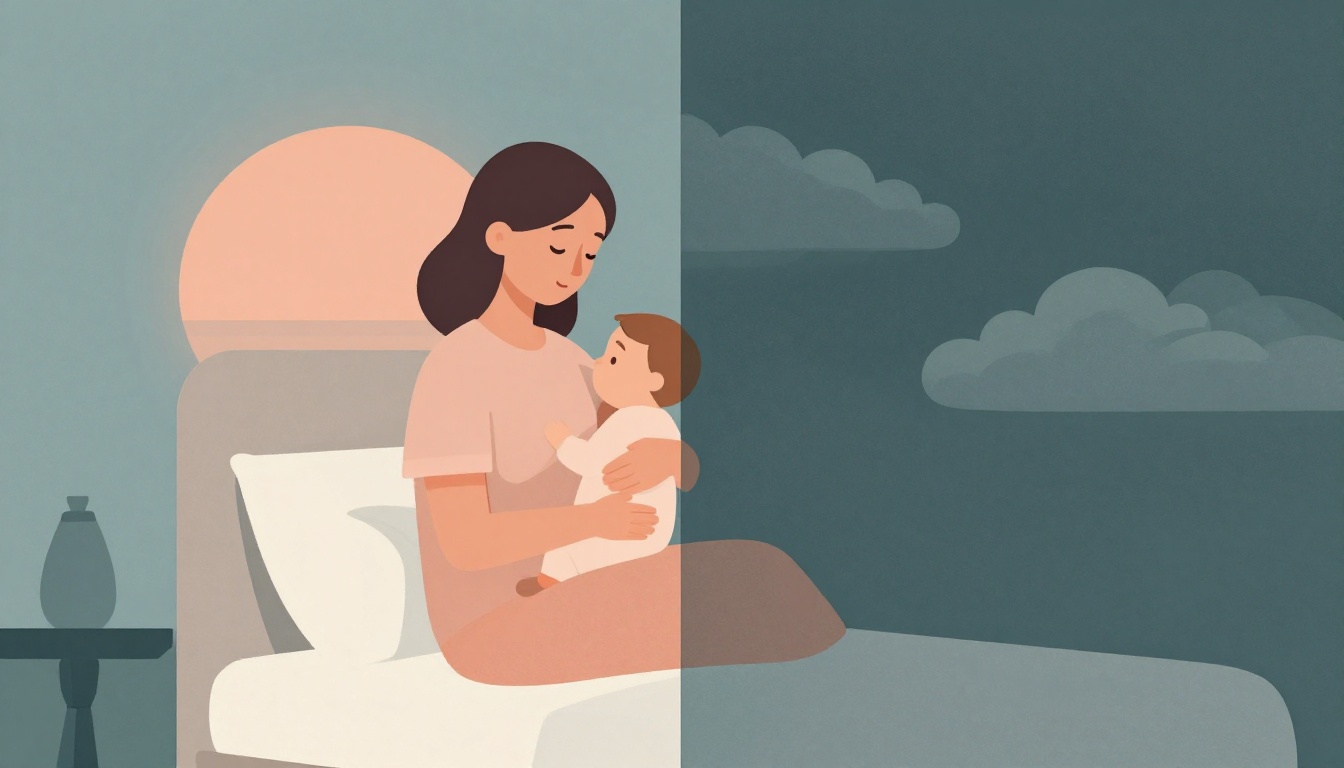
You just had a baby. You expected joy, but instead you feel tearful, irritable, and exhausted. Is this normal? Or is it something more serious?
Every new mother experiences emotional ups and downs after childbirth. But there's a critical difference between the temporary "baby blues" and clinical postpartum depression (PPD). Knowing that difference can change your recovery.
How long do baby blues symptoms typically last?
Select one answer.
What are the baby blues?
The baby blues are a short-term emotional dip that affects up to 80% of new mothers, according to WebMD. Symptoms usually start 2 to 3 days after delivery and resolve on their own within 1 to 2 weeks.
Common signs include:
- Mood swings and crying spells
- Irritability
- Anxiety
- Trouble sleeping
These feelings come and go. You might feel fine one hour and overwhelmed the next. The key is that they fade quickly without treatment.
What is postpartum depression?
Postpartum depression is more severe and lasts longer. It affects up to 1 in 7 women, as reported by Cleveland Clinic. PPD can begin anytime within the first year after childbirth, but most commonly appears around 6 weeks postpartum.
Symptoms of PPD include:
- Intense sadness or emptiness lasting more than 2 weeks
- Loss of interest in activities you once enjoyed
- Extreme anxiety or panic attacks
- Difficulty bonding with your baby
- Changes in appetite or sleep (insomnia or oversleeping)
- Feelings of hopelessness, guilt, or worthlessness
- Thoughts of harming yourself or your baby
Unlike the baby blues, PPD does not go away on its own. It requires professional treatment.
Key differences at a glance
| Feature | Baby Blues | Postpartum Depression |
|---|---|---|
| Onset | 2-3 days after birth | Any time in first year |
| Duration | Up to 2 weeks | Longer than 2 weeks |
| Severity | Mild, comes and goes | Persistent, intense |
| Treatment | Self-care, support | Therapy, medication, or both |
When to seek help
If your symptoms last more than 2 weeks or get worse instead of better, it's time to reach out. The Office on Women's Health recommends seeing a doctor if your baby blues persist beyond a few weeks.
Red flags that require immediate attention:
- Thoughts of harming yourself or your baby
- Inability to care for yourself or your newborn
- Severe anxiety or panic attacks
- Feeling detached from reality
Actionable steps you can take today
- Track your symptoms. Write down how you feel each day. Note when symptoms started and whether they're improving or worsening.
- Talk to someone. Share your feelings with your partner, a trusted friend, or your healthcare provider. You don't have to go through this alone.
- Prioritize rest. Sleep deprivation makes everything worse. Accept help with nighttime feedings so you can get at least 4-5 consecutive hours of sleep.
- Reach out for professional support. A therapist or psychiatrist who specializes in postpartum mental health can make all the difference.
How the Resident Expert Can Help
Natalie Marchione, a psychiatric nurse practitioner at Rooted Postpartum Care, offers holistic, virtual mental health support for new mothers in Maryland, Washington DC, and Wyoming. Her approach combines therapy, nutrition guidance, and medication management when needed. She treats the whole person, not just the symptoms, so you can heal fully and bond with your baby. You deserve care that sees you.
Quiz: Test your knowledge
How long do baby blues symptoms typically last?
A. Up to 2 weeks B. Up to 6 weeks C. Up to 3 months