
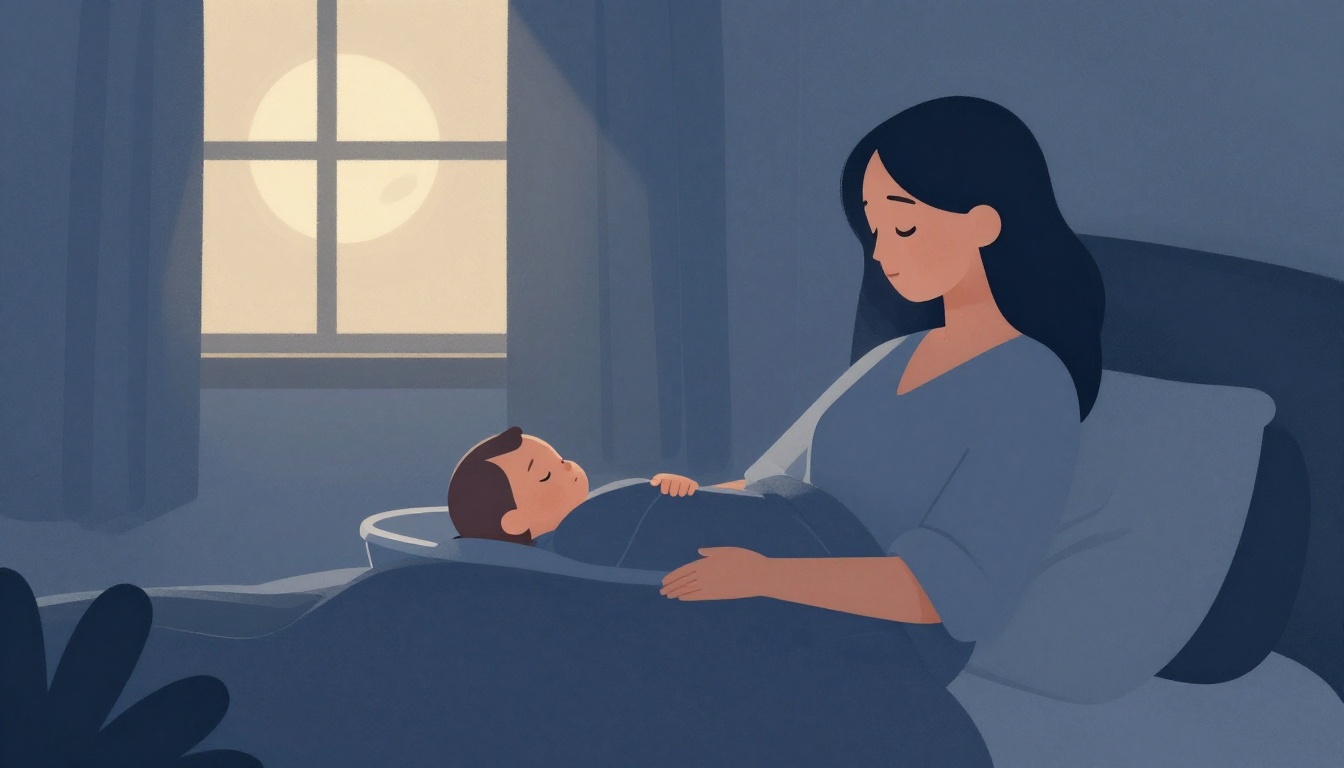
You're running on fumes, and the baby still wakes every two hours. The advice to "sleep when the baby sleeps" feels like a cruel joke when you also need to eat, shower, and maybe see another adult. But protecting your own sleep isn't selfish—it's essential. Sleep deprivation can lead to problems concentrating, low mood, and an increased risk of postpartum depression. The good news: you can strategically maximize the rest you do get, even when your baby won't sleep through the night.
What is a safe sleep practice to follow even when you're exhausted?
Select one answer.
Why your sleep matters as much as the baby's
Newborns sleep 16 to 18 hours a day, but in short bursts of 2 to 3 hours. That fragmented pattern means you're rarely getting the deep, restorative sleep your body needs to heal and regulate mood. Chronic sleep loss doesn't just make you tired—it can increase the risk of depression, anxiety, and even physical health problems like high blood pressure. Recognizing that your rest is a health priority, not a luxury, is the first step.
Practical strategies to bank more sleep
1. Split the night into shifts
If you have a partner or trusted helper, divide the night into defined blocks. For example, one person handles all baby duties from 10 pm to 2 am, and the other from 2 am to 6 am. This guarantees each of you at least one solid four-hour stretch. If you're breastfeeding, pump before bed so your partner can give a bottle during their shift. Even if you're exclusively nursing, your partner can handle diaper changes and soothing after feedings to let you fall back asleep faster.
2. Sleep when the baby sleeps—but set a timer
Yes, it's the most repeated advice, but it works. Even a 20-minute nap can restore energy. The trick is to actually lie down, not start laundry. Set an alarm if you're worried about sleeping too long. If you can't fall asleep, just rest with your eyes closed—deep relaxation for 5 to 10 minutes can refresh you.
3. Create a sleep-friendly environment for yourself
Your bedroom should be dark, cool, and quiet. Blackout curtains, a sound machine, and a comfortable mattress can make a big difference. Keep your phone out of reach and stop using screens 30 to 60 minutes before you plan to sleep. Avoid caffeine and alcohol in the hours before bedtime—they disrupt sleep quality.
4. Accept help and lower your standards
Ask friends and relatives to come over and hold the baby while you nap. If you're on your own, see if someone can stay for a few days. Let go of non-essential chores. The dishes can wait; your sleep can't. As the NHS advises, ignore non-essential jobs and focus on rest.
5. Get outside and move your body
A daily walk with your baby does double duty: fresh air and light exercise can boost your energy and improve your mood. Even a short stroll helps regulate your circadian rhythm and makes it easier to fall asleep at night.
6. Follow safe sleep rules—even when exhausted
When you're sleep-deprived, the temptation to bring baby into bed is strong. But sleeping with your baby in your bed is unsafe and increases the risk of sudden unexpected infant death (SUID). Instead, use a bassinet or portable crib next to your bed. Always place your baby on their back on a flat, separate sleep space free of toys and loose bedding. This keeps your baby safe and lets you rest more peacefully.
When to seek help
If you're unable to sleep even when the baby is resting, or if you're experiencing persistent low mood, anxiety, or hopelessness, it's time to talk to a healthcare provider. Sleep deprivation can worsen postpartum depression and anxiety, and you deserve support.
How the Featured Expert Can Help
If you're in Maryland, Washington DC, or Wyoming and struggling with postpartum anxiety, depression, or burnout, Rooted Postpartum Care offers virtual, holistic mental health and nutrition-focused care. Led by psychiatric nurse practitioner Natalie Marchione, the practice provides individualized support that treats the whole person—including sleep, stress, and nutrition—so you can recover and thrive.
Quiz
Question: What is a safe sleep practice to follow even when you're exhausted?
- Options: ["Placing baby on their back in a separate bassinet", "Bringing baby into your bed for easier feeding", "Letting baby sleep on a sofa cushion"]
- Correct Index: 0