
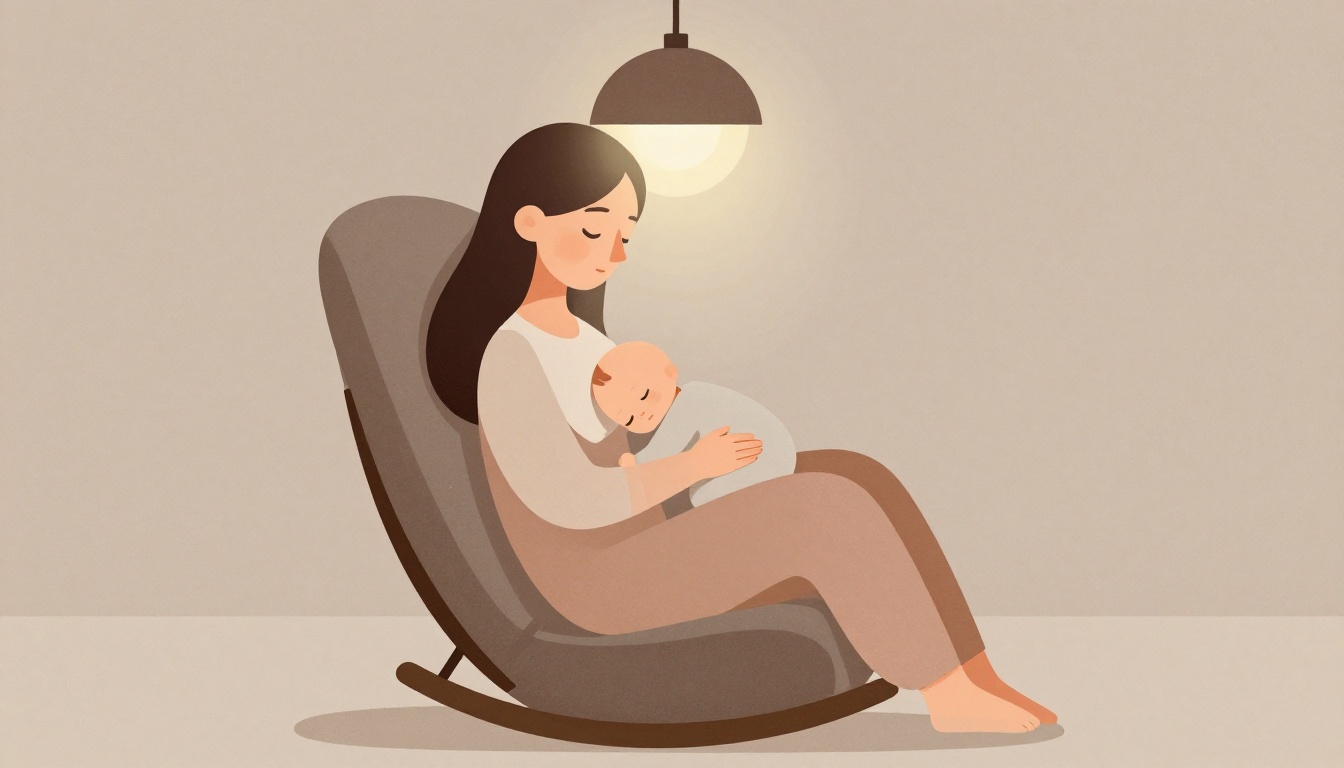
What percentage of new moms report having unwanted intrusive thoughts about infant harm?
Select one answer.
Understanding postpartum intrusive thoughts
If you've had a baby and suddenly find yourself flooded with scary, unwanted thoughts about harm coming to your baby or yourself, you are not alone. Research shows that at least 70% of new moms report having intrusive thoughts about infant harm, and 50% have thoughts related to intentionally harming their baby (UPMC HealthBeat). These thoughts are not a sign that you are a bad mother or that you will act on them. In fact, they are a distorted survival mechanism — your brain is wired to scan for threats to keep your baby safe.
What causes intrusive thoughts after birth?
Postpartum intrusive thoughts often emerge from a combination of factors:
- Hormonal shifts: The sudden drop in estrogen and progesterone after childbirth can affect mood and trigger obsessive thinking.
- Sleep deprivation and stress: Constant newborn care and lack of rest heighten anxiety and make intrusive thoughts more likely.
- Perinatal OCD: About 11% of new moms experience postpartum obsessive-compulsive disorder, where intrusive thoughts lead to repetitive behaviors (compulsions) aimed at reducing distress (CPW Care).
- Postpartum depression or anxiety: These conditions often co-occur with intrusive thoughts and can amplify their intensity.
Importantly, these thoughts are ego-dystonic — they conflict with your true values and desires. The very fact that they distress you so much is proof that you do not want to act on them.
How long do they last?
Postpartum intrusive thoughts typically peak around 5–6 weeks after giving birth and, for most people, decrease or resolve by 6 months postpartum (Partum Health). However, if they persist, become more frequent, or interfere with your ability to care for yourself or your baby, professional support is essential.
Practical steps to reduce intrusive thoughts
1. Do not give power to the thoughts
The single most effective strategy is to stop fighting the thoughts. When you try to suppress or argue with an intrusive thought, you actually strengthen it. Instead, acknowledge it neutrally: "That's an intrusive thought. It's not a fact. It's just my brain trying to protect my baby." This reduces the emotional charge and weakens the thought over time.
2. Use a quick mindfulness technique
When a thought arises, take 5 minutes to visualize placing it on a leaf floating down a stream, or imagine putting it in a box on a shelf. If you don't have time, say out loud: "That thought is not helpful right now. I choose to focus on my breathing." This creates distance between you and the thought.
3. Prioritize sleep and ask for help
Sleep deprivation is a major amplifier of intrusive thoughts. Ask your partner, family, or a postpartum doula to take over one night feed so you can get at least 4–5 consecutive hours of sleep. Even one good night can significantly reduce the frequency of intrusive thoughts.
4. Seek therapy with proven approaches
Cognitive Behavioral Therapy (CBT) combined with Exposure and Response Prevention (ERP) is the most recommended treatment for postpartum OCD and intrusive thoughts (Mind UK). A therapist can help you gradually face feared situations without performing compulsions, which breaks the cycle of anxiety.
5. Know when to get professional help
Reach out to a provider if:
- The thoughts are happening multiple times a day and feel uncontrollable.
- You are avoiding caring for your baby (e.g., refusing to bathe or change them) because of fear.
- You are engaging in excessive checking, reassurance-seeking, or rituals.
- The thoughts are accompanied by severe anxiety, depression, or hopelessness.
How the Resident Expert Can Help
If you are in Maryland, Washington DC, or Wyoming, Rooted Postpartum Care offers virtual, holistic mental health and nutrition-focused care for new mothers. Led by psychiatric nurse practitioner Natalie Marchione, the practice provides individualized support for postpartum anxiety, depression, and burnout. Visit Rooted Postpartum Care to learn more.
Quiz: Test your knowledge
What percentage of new moms report having unwanted intrusive thoughts about infant harm?
- A. 10%
- B. 70%
- C. 95%
Correct answer: B. 70%