
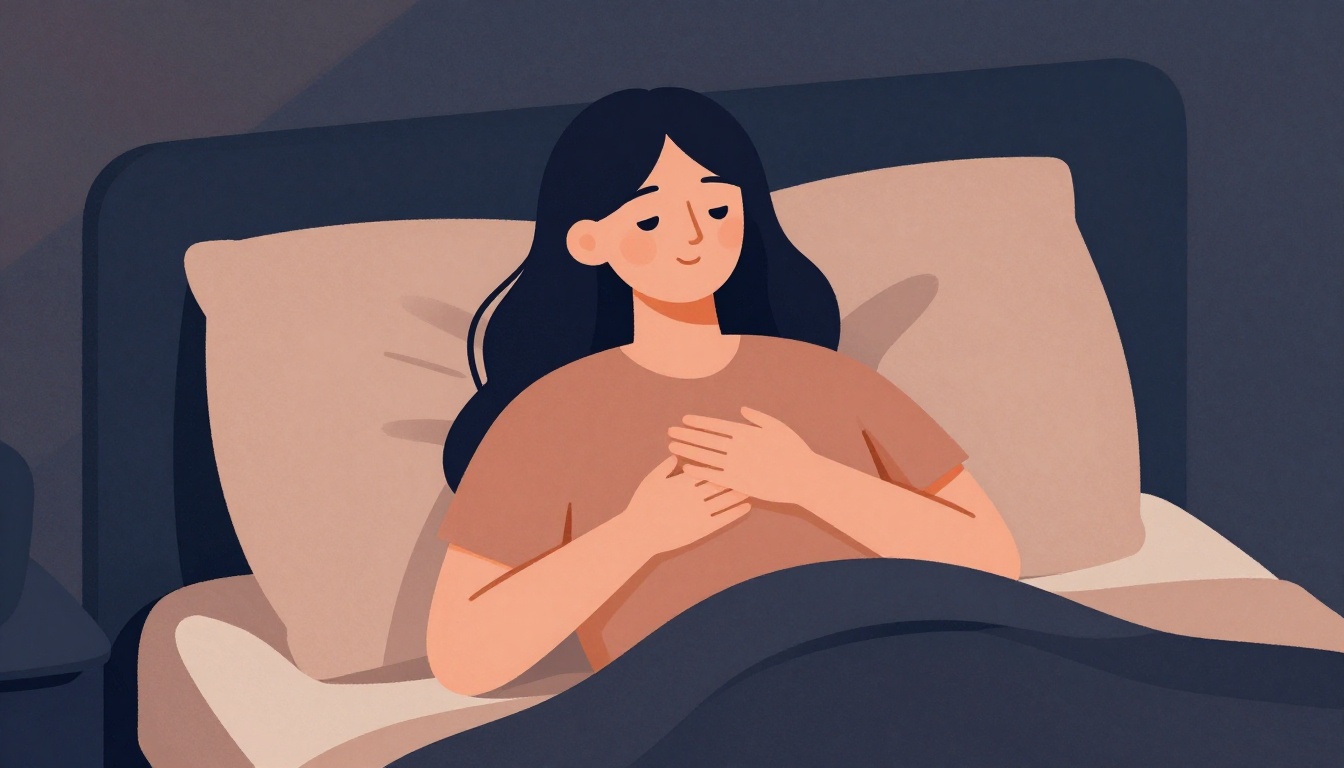
You haven't slept more than three hours straight in weeks. Your partner tells you to "just rest," but when you close your eyes, your brain runs a loop of worst-case scenarios about the baby. You're exhausted, yet you can't stop.
That's not a rest problem. That's a signal.
Postpartum anxiety affects an estimated 1 in 5 women after childbirth, according to Texas Children's Hospital. And unlike the baby blues — which typically lift within two weeks — postpartum anxiety sticks around and gets louder. Rest alone won't fix it.
Here are five signs that what you're feeling needs more than a nap.
What percentage of women experience postpartum anxiety after childbirth?
Select one answer.
1. Your Worry Never Shuts Off
Every new parent worries. You check the baby's breathing. You second-guess the car seat straps. That's normal.
But when worry becomes a constant background hum that you can't silence — even when the baby is safe, fed, and asleep — you've crossed a line. The Cleveland Clinic describes postpartum anxiety as excessive worrying that persists most of the day, every day. If you're lying awake at night worrying while the baby is sleeping peacefully, rest isn't the answer. Your nervous system needs recalibration, not more pillow time.
2. Physical Symptoms That Won't Settle
Anxiety isn't just in your head. It shows up in your body.
Racing heart. Shortness of breath. Nausea. Dizziness. Muscle tension that makes your shoulders feel like concrete. These are classic signs that your body is stuck in fight-or-flight mode.
Mental Health America notes that physical symptoms like heart palpitations, loss of appetite, and trouble sitting still are hallmark signs of postpartum anxiety. If you've Googled your symptoms convinced something is medically wrong — and every test comes back normal — anxiety is likely the culprit. Rest won't stop a racing heart. Targeted treatment will.
3. Intrusive Thoughts That Scare You
This is the sign most mothers are afraid to admit.
You're washing bottles and a sudden image flashes through your mind — the baby falling, getting hurt, something terrible happening. The thought feels so real you gasp. Then you feel guilty for even thinking it.
Intrusive thoughts are a core symptom of postpartum anxiety and can also overlap with postpartum OCD. They are not wishes. They are not premonitions. They are your brain's overactive alarm system misfiring. The key difference between normal worry and a clinical issue is how you react to these thoughts. If they leave you paralyzed, avoiding situations, or checking obsessively, you need more than rest. You need professional support to rewire that alarm system.
4. You're Avoiding Normal Situations
Are you afraid to let anyone else hold the baby? Do you skip leaving the house because something bad might happen? Have you stopped taking showers because you can't bear to be out of eyesight of the bassinet?
Avoidance is a major red flag. When anxiety dictates what you can and cannot do, it has moved beyond manageable worry into a disorder that interferes with daily life. Postpartum anxiety often causes mothers to avoid activities or people out of fear — and that isolation only feeds the cycle. Rest won't help if you're too afraid to use it.
5. You Can't Bond With Your Baby
This one is counterintuitive. You'd think anxiety would make you hyper-attentive to your baby. And it does — but not in a connected way.
Many mothers with postpartum anxiety describe feeling detached, numb, or like they're watching themselves from outside their body. The constant mental noise leaves no room for the quiet, warm feelings of bonding. You're so busy scanning for threats that you can't relax into love.
If you feel like you're going through the motions without emotional connection, that is not a character flaw. It is a symptom. And it is treatable.
How the Resident Expert Can Help
You don't have to figure this out alone. Rooted Postpartum Care, led by psychiatric nurse practitioner Natalie Marchione, offers virtual holistic mental health and nutrition-focused care for new mothers across Maryland, Washington DC, and Wyoming. Unlike a generic provider, Rooted Postpartum Care treats the whole picture — your emotional health, your sleep, your nutrition, and your stress levels — with individualized support that meets you where you are. If the signs above sound familiar, reaching out is the most practical step you can take. You deserve care that goes beyond being told to rest.