
According to NHS guidance, how long can it take to recover from a caesarean section?
Select one answer.
Why your body feels stiff after a C-section
A C-section is major abdominal surgery, and recovery can take up to 6–8 weeks or longer, according to NHS guidance on exercises after caesarean section. During that time, feeding, carrying, and interrupted sleep often leave you hunched and tight through the neck, shoulders, hips, and lower back.
The good news: gentle movement can help. Light, intentional stretching supports circulation, reduces stiffness, and helps you reconnect with your core — as long as you avoid anything that strains the incision.
What "safe" means in early recovery
Before you start, get clearance from your provider. Most people are cleared for exercise at 6–8 weeks after delivery if there have been no complications, per Cornerstone Physio's C-section recovery guide.
Keep these rules in mind:
- No pressure on the scar. Skip crunches, sit-ups, and anything that pulls at the incision.
- Breathe, don't brace. Avoid holding your breath or bearing down.
- Stop if it hurts. Discomfort along the incision means back off.
- Short and frequent beats long and hard. Two-minute windows scattered through your day work well.
The 5-minute routine
Do this on a soft surface. Move slowly and stop at the first sign of pulling.
1. Seated 360° breathing (1 minute)
Sit upright with your back supported. Inhale through your nose and let your ribcage expand to the sides, back, and front. Exhale slowly through pursed lips. This reconnects your diaphragm and core without stressing the scar.
2. Neck and shoulder rolls (1 minute)
Drop your chin gently toward your chest, then roll your head slowly side to side. Follow with slow shoulder circles, forward and back. This releases tension from feeding and carrying.
3. Seated side stretch (1 minute)
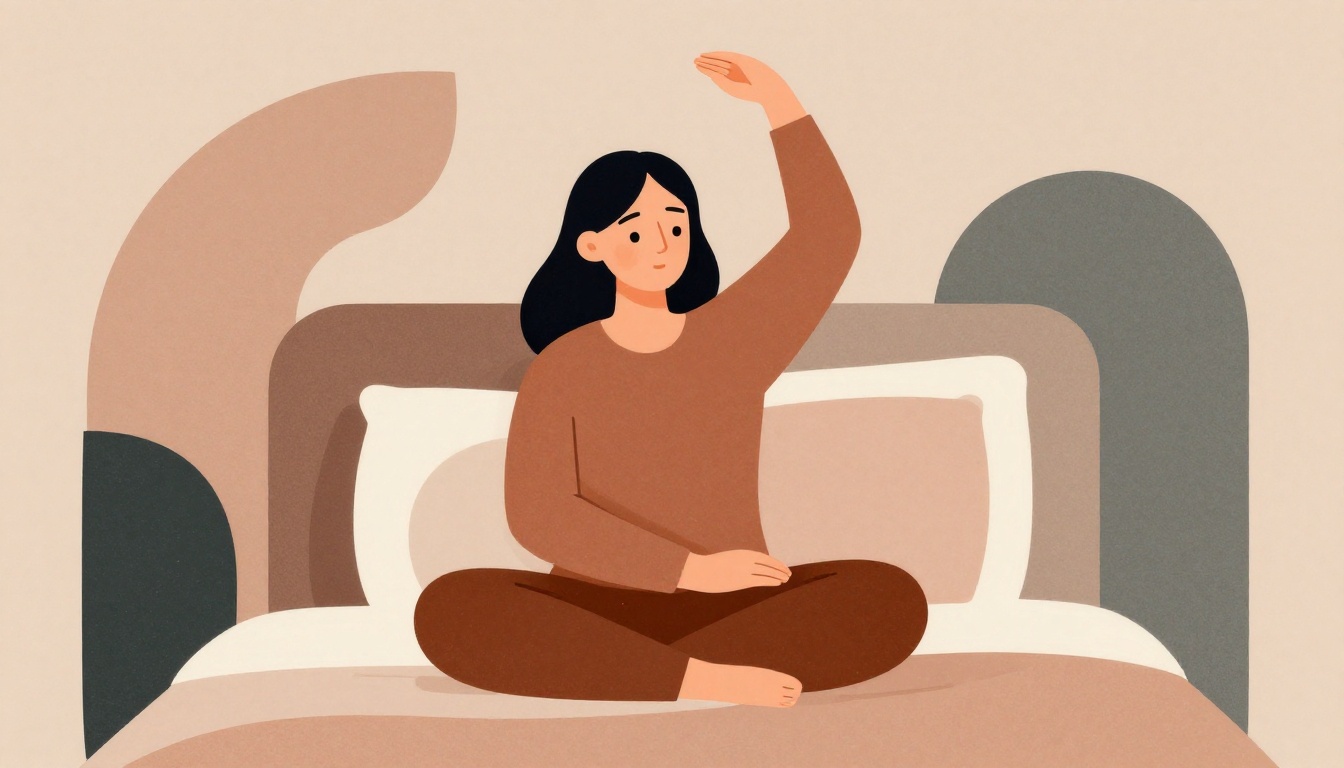
Sit tall. Reach one arm overhead and lean gently to the opposite side. Hold for a few breaths, then switch. Keep the movement small and avoid twisting through your abdomen.
4. Supine hip flexor stretch (1 minute)
Lie at the edge of your bed or couch. Bend your inside knee and let your outside leg hang toward the floor, as described in Restore Hope's postpartum C-section exercise guide. Hold briefly, then switch sides.
5. Ankle pumps and leg slides (1 minute)
Bend your feet up and down from the ankle about 15 times, then add slow circles. Finish with gentle leg slides along the bed. These support circulation and reduce clot risk, per NHS guidance.
A quick checklist before you stretch
- Provider clearance received
- Soft surface, no equipment needed
- No breath-holding or bracing
- No pulling at the incision
- Stop if pain increases
When to wait or call your provider
Skip stretching and contact your provider if you have increased bleeding, fever, worsening incision pain, redness, or discharge. High-impact exercise like running or weight training is usually best delayed until at least 12 weeks, according to Tommy's guidance on exercising after a C-section.
How the Featured Expert Can Help
If stretching helps your body but you're still feeling anxious, burned out, or overwhelmed, Rooted Postpartum Care offers holistic mental health and nutrition-focused support for new mothers. Led by psychiatric nurse practitioner Natalie Marchione, the practice provides virtual, individualized care for postpartum anxiety, depression, and burnout across Maryland, Washington DC, and Wyoming. You can learn more at Rooted Postpartum Care.
Think you know the basics? Test yourself below.